

A great cup of coffee is never the result of one perfect action. It is always a combination of factors: the origin of the bean, the roast, the water temperature, the amount of coffee you use, how long it stays in contact with water, and the grind size.
If one of these elements is off, you will immediately notice it in your cup.
So grind size is not the most important element, but it is a sensitive and often underestimated part of brewing coffee. And that is exactly what makes it such a powerful tool for improving your coffee experience.
In this article, we’ll explain how you can use it to your advantage!
What do we mean by coffee grind size?
By coffee grind size, we simply mean how coarse or fine the coffee beans are ground. This can range from as fine as flour to as coarse as sea salt. That coarseness determines how much surface area comes into contact with the water and therefore how quickly the coffee releases its flavour.
The finer the grind, the more contact with the water and the faster the flavour is extracted. The coarser the grind, the smaller the contact surface and the slower the flavour is released.

Why grind size matters for the flavour of your coffee
Coffee brewing is all about extraction: the process in which water draws flavour compounds out of the ground coffee. And grind size determines how quickly and thoroughly this extraction happens.
Too little extraction often tastes sour or thin, while too much extraction becomes bitter and harsh. Grind size determines how much surface area the water can reach. A fine grind releases flavour quickly, while a coarse grind extracts more slowly and evenly.
That’s why there is no such thing as “the right grind for coffee” — only “the right grind for your brewing method.”
The right grind size for each brewing method

Cafetière / French press
A cafetière uses full immersion: coffee and water steep together for several minutes. This requires a coarse grind, roughly the texture of coarse sea salt.
This coarseness prevents the flavour from becoming too harsh and creates a clear, rounded cup.

Filter / Pour-over
Filter coffee works best with a medium grind (similar to granulated sugar).
The water should encounter enough resistance to slowly carry the flavours through, but not so much that it gets stuck and turns bitter.
Keep in mind: with fast filter methods — as the name suggests — where the brew time is shorter, a slightly finer grind works better.
With a Chemex, the grind can be slightly coarser because of the thick filter paper.

Moka pot (percolator)
A moka pot sits nicely between filter coffee and espresso and works best with a medium-fine grind.
If the grind is too fine, the coffee can taste burnt; if it is too coarse, the result will be a weak espresso-style coffee.

Espresso
Espresso is brewed under high pressure and has only 25–30 seconds to extract flavour from the coffee. This requires a fine grind, soft like flour.
Espresso grind size is very precise, which is why it often takes some experimenting to find the right balance between grind size, pressure, temperature, and extraction time. In general: too coarse results in sour espresso; too fine makes it bitter and syrupy.
Did you know we also take the pressure of your espresso machine into account? The higher the pressure (as with more advanced espresso machines), the finer the grind can be. Lower pressure machines often need a slightly coarser grind.

Does roast level require a different grind size?
Depending on your brewing method, the roast level of the coffee definitely influences how coarse or fine we grind your coffee. The roast level determines how hard, brittle, and porous a bean is, which changes how much resistance it gives during grinding. That affects how quickly it breaks apart and how much water it comes into contact with — and therefore the flavour as well!
Dark roast
Softer, more brittle, and more easily dissolved.
These beans often require a slightly coarser grind to reduce bitterness.

Medium roast
The most forgiving roast level.
Usually, a medium grind suited to your brewing method works well, with small adjustments based on personal taste.

Light roast
Harder and denser in structure.
A slightly finer grind often works better to achieve enough extraction, especially for filter brewing.

How to find your perfect grind size
Grinding your own coffee
Do you grind your own coffee, but still feel like something is missing? Taste your coffee the way you normally brew it and pay attention to the following signals.
Does your brewed coffee taste too:
Sour, bright, but thin → grind finer
Bitter, heavy, harsh → grind coarser
Weak or watery → keep the same grind size, but use a slightly higher dose or hotter water
Making one small adjustment at a time makes the difference easier to notice. So give it a try!
You do not need to be a barista to optimise your coffee experience at home. This works for everyone. And your taste is your taste! There is no right or wrong. As long as you enjoy it.
Just remember: grind size is not the only factor that makes a difference. But it is definitely worth experimenting with!
Having your coffee ground in-store
When buying coffee in our shop, tell us which flavours you enjoy and which brewing method you use at home. We can then not only advise you on which coffee beans and roast level to try, but also on the ideal grind size for your brewing method.
And we will grind the coffee fresh for you on the spot. It doesn’t get fresher than that!

Ordering online
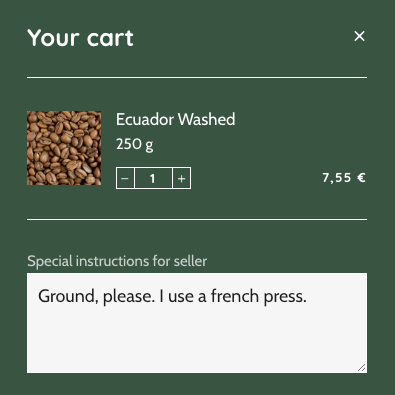
If you cannot make it to the shop and order your coffee online, you can also let us know your preferred grind size. Simply add it in the comments section of your order.
Not sure which grind size you need?
Then simply tell us which brewing method you use.
Using an espresso machine?
Tell us the brand of your machine and we will determine — based on your coffee choice, brewing method, and possible pressure differences — the best grind size for you.
Example:
Store your freshly ground coffee properly
Although grind size strongly affects the flavour of coffee, the freshness of the grind is at least as important.
Aromas start disappearing as soon as coffee is ground. That is why freshly ground coffee smells so rich and tastes so much deeper. Make sure to store your freshly ground coffee properly in an airtight container such as [this one].

The moral of the grind story
Coffee is a balance of multiple factors, and none of them stand alone.
But grind size is one of the easiest variables to experiment with: small, subtle, yet capable of making a huge difference to the final experience.
In the end, the most important thing remains simple: drink your coffee the way you enjoy it most!
Would you like advice on which grind size best suits your brewing method? Visit us in-store! We would love to help you make your best cup of coffee yet.
Curious about all the different coffees we offer?
Explore them here!